
This blog post is a write up of a talk I’ve done a couple of times over the years. I’ve finally got round to writing it down (procrastination is one of my super powers)
It’s based on my experiences coming to Co-op Digital a few years ago, but also encompasses lots of other things I’ve learnt along the way working with different clients during my time at ustwo and other agencies. If you work with clients or do agile delivery inside a business that is new to it, you might relate.
For this talk and subsequent blog I talked to my colleague Emma from Co-op food about what her experience was like working with a Digital team for the first time. I thought it was really useful to hear things from her perspective after our period of working together.
How it all started
The digital team had come to work together with food on a discovery, the question we were looking to answer for the business was a time/cost related one “how can we give store managers more time back to be on the shop floor ” There was a huge amount of paper based admin in stores that was taking lots of time for colleagues to do. We wanted to make this better for them and save time and money in the process. you can read more about this here and here but safe to say this was the first time lots of our colleagues had worked in this way.
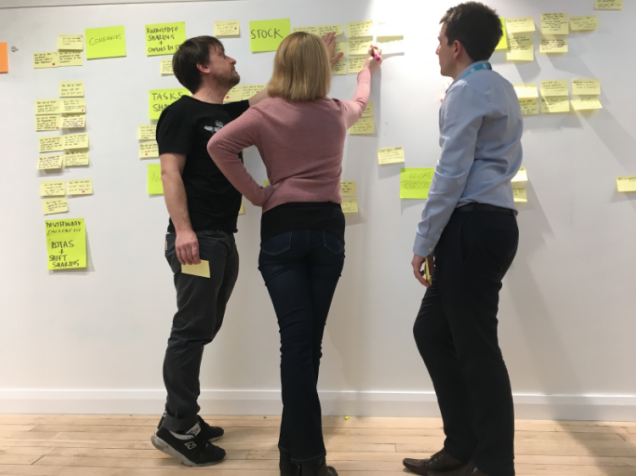
Some of the techniques we used, user testing, service mapping, sketching were very new to them but they really jumped in to it willingly and got stuck in.
How the food business were used to working.
To give an example of how different the digital teams working approach was for Emma and her food colleagues, In the time it would take us to have researched, built and tested a prototype with users, they would be still only in the scoping phase of a waterfall project.
At the time there wasn’t a culture of doing user research with colleagues and often colleagues were scared to talk about things in case they got reprimanded by their managers. There was lots to do both from a technical perspective and a people perspective.
Emma is someone who has worked her way up from working in stores, to store manager, area manager to now being asked to work on this large programme of work for the food business. It was a big deal for her to be given the responsibility. She was put into an SME/Product owner role and assigned a team of us digital folk to work with.
Once the discovery is over, into Alpha
So we’ve come through this discovery, it’s been a bit of whirlwind and now we’re cracking on with the work. We started to get on with building a web service called ‘how do I’, a team to look at holiday requests and one to look at how to manage day to day tasks electronically instead of endless paper forms.
Once this manic and exciting discovery phase was finished and we started to get into a rhythm of working on a product and delivering, some tensions started to bubble up and things started to unravel a bit. On the surface there was silence and some slightly grumpy faces. After talking with people I learned that this is what was going on from two different perspectives.
The Digital team felt
- People were attending show and tells but not really saying anything. Why aren’t they speaking up?
- The team were getting a lot of requests that they felt were unreasonable, things needing to be signed off by multiple managers. Having to tell them on which day they will deliver which thing exactly.
- It feels like they aren’t quite understanding how we’re working, or they are asking for a lot of detail that’s slowing the process down. Why aren’t they letting us get on with things?!
Emma’s perspective at the time
- “Someone has to be the leader” Emma was really confused about the concept of a self organising team and felt like the team were out of control without someone telling them what to do. This had never occurred to me but made a lot of sense when you think about the environment she was used to.
- “The word when seems to be a swear word” nothing in Agile says you can’t give someone an expected time of delivery, but Emma was getting push back when she was asking about dates — she wasn’t coming away feeling like she knew what was happening and this was hugely frustrating for her. She had her managers asking her what was going on and she couldn’t tell them.
So what’s really going on here?
On the surface this can feel like the Emma is making unreasonable demands and the team are being difficult for the sake of it. It doesn’t feel like there’s any place we can meet in the middle as people just aren’t talking to one another. The things that stood out for me when I reflected on it were:
- Lack of psychological safety — we didn’t spend enough time just getting to know each other at the beginning. Even though people were being friendly they were just scratching the surface and didn’t really feel safe to speak up in front of each other about the problems they were dealing with.
- Trust issues — Emma had never met these people before and now she’s supposed to trust them with something that she’s accountable for, of course she’s going to be nervous about that!
- Not knowing how you fit in or what’s expected of you — Emma had never played the role of a product owner before and I don’t think anybody ever sat down and really explained what it meant.
What did we learn to do differently?
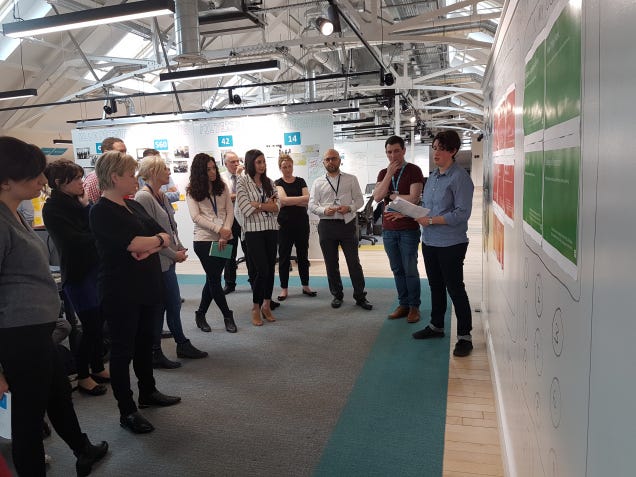
Cutting a very long story short, We made progress — we made things and learned loads!
Here are some things that I’ve taken from that, and other client work that I make sure to consider on every new piece of work, or new working relationship.
- Take some time before you set off on the journey to talk about how this is going to feel
It’s important to acknowledge what might come up when you start working with people who haven’t worked with an agile team before. We don’t need to pretend that it’s going to be a totally smooth process or that we won’t come across lots of bumps in the road or misunderstandings.
In a similar way to a pre-mortem where you think about what could go wrong, you can also run an exercise with the team and your stakeholders thinking about where the emotions might run high, where the stresses might be — what type of things might make people anxious — you can refer to the session later on in the project and remind people about it and that it’s OK and completely normal. We reflect, learn and move on.
2. Silence doesn’t equal understanding — never assume someone knows what you mean
Emma told me that there were times when she felt too embarrassed to question what was happening so said nothing. The team took her silence as disengagement but it wasn’t that. She didn’t want to ask a question to clarify what was going on.
As a delivery manager or coach your job is to ask the clarifying sometimes stupid questions. The ones that remind people of why we’re doing this. This makes people feel safe enough to ask questions too and ultimately saves a lot of time in that place of misunderstanding.
2. Focus on getting the key relationships and roles right and the rest will follow
You can really set an example to the rest of the team by working on some key relationships with your client/colleague you are working with. For example as a delivery manager, if there’s an equivalent project manager then bond with that person, get to know them and you will find the whole process a lot easier when inevitable misunderstandings to arise.
3. Factor in extra time for learning and support
Provide some kind of ‘Agile immersion’ if you’re working with people who are completely new to Agile, even if it seems obvious to you I guarantee it will be useful for them. Get your clients or colleagues to visit other teams, see how they work, recommend books or talks they might be interested in.
Remember though, it goes both ways. Whenever you are working with a business who has a problem to solve they have tons to teach you so we are all learning together. Be wary of appearing to know it all.
Also set a realistic goal for how much you can deliver straight away, remind people that we are learning how to work together so we need to find our cadence as a team before we can really start delivering as a unit.
4. Transforming a business AND delivering software is exhausting…
Delivering + taking people on the journey is exhausting . As a Delivery Manager this is especially hard as not only do you have to get something done with a lot of people who aren’t on the same page, but need extra convincing and coaching as well. It can’t be underestimated.
4.1 …But so is delivering and being ‘transformed’
If you’re someone who is being ‘transformed’ you have a deadline from your manager, you’ve been thrust into a word of post-its and vague delivery dates and you’re expected to chill out about it and go with the flow — this isn’t easy. I’m always conscious of this when I work with new people.
5. Be humble, curious and empathetic — we are more than our role. It’s so easy to disconnect from others, blame other departments, e.g. IT,Procurement etc. In reality digital transformation is about people getting together to make a thing and generally muddling through as best they can together, learning, failing and getting on with it. It’s just not about snazzy processes or technology. Those things are nice, but if you aren’t talking to each other and spending lots of time in a grump you aren’t going to get the best out of your working life.
 Cara Bermingham
Leave a comment